Trst
Trieste and Duino represent two fascinating stops along the Dante route, as this area weaves together historical sources, local legends, and an exceptional natural and literary heritage. The region is linked to the tradition of Dante's exile and his supposed visits to Duino, while also opening a window onto the wider cultural space of the northern Adriatic, where important literary works were created over the centuries and different cultures met. Together, the two towns symbolically represent a park of exile and majestic landscapes.
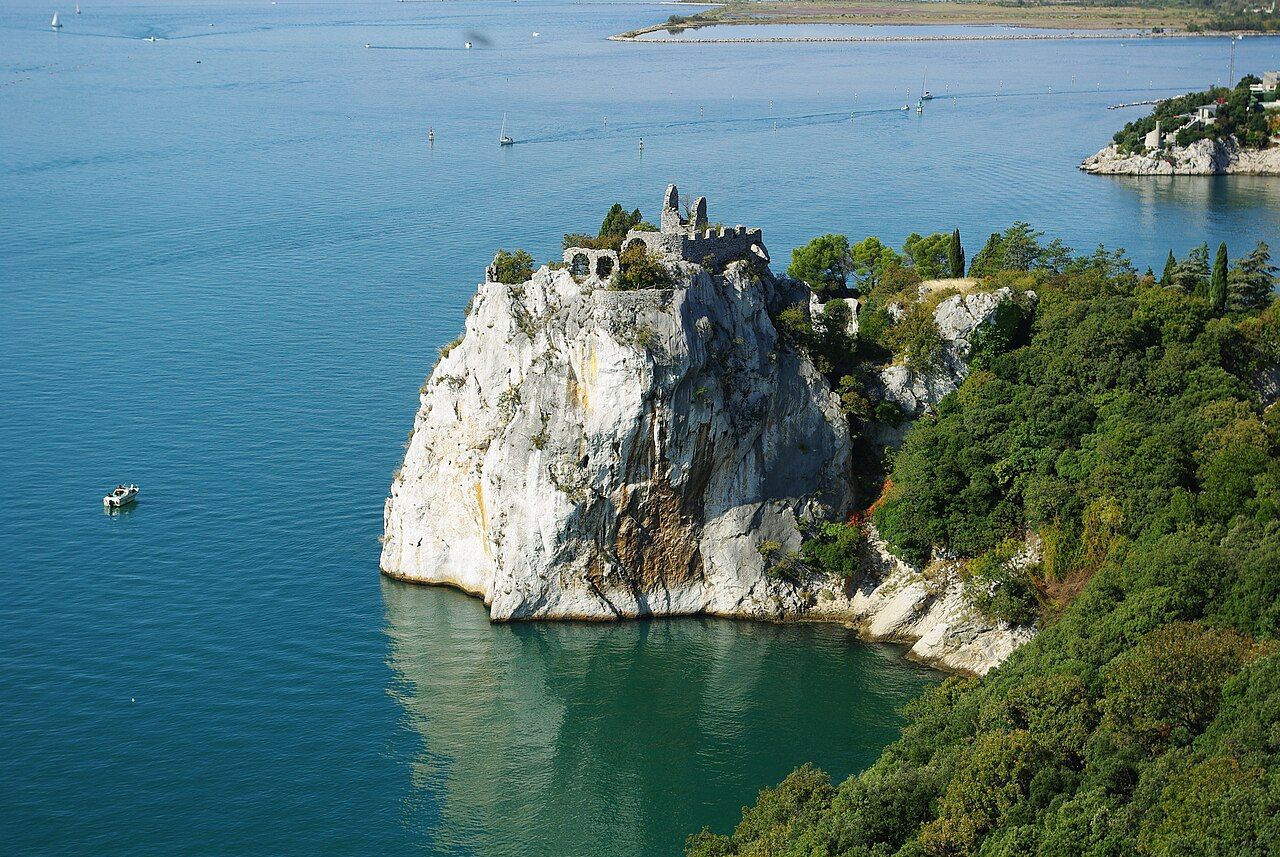
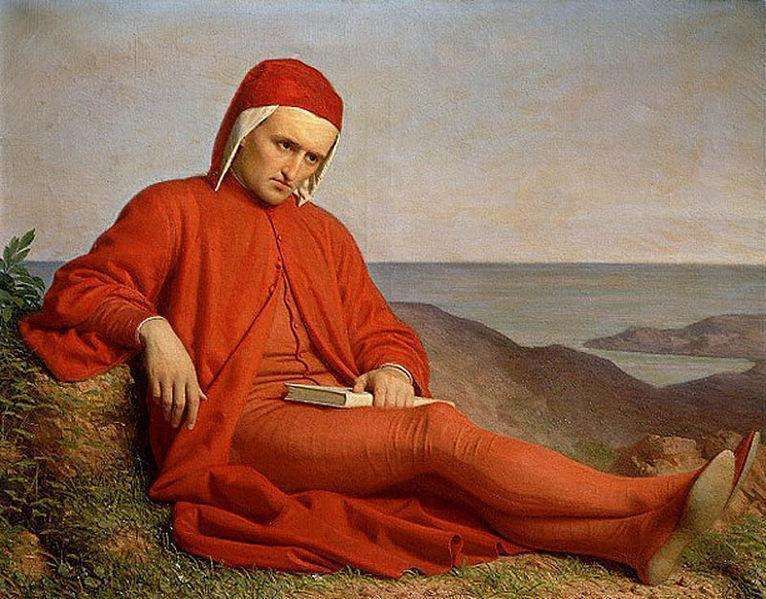
Legend has it that during his exile Dante visited Duino as a guest of the local lords. Dante is said to have been a guest of Hugo III of Duino at the old castle, in his role as ambassador of Cangrande I della Scala. In the Comedy, Dante mentions Gaia da Camino, whose sister Beatrice married Henry III of Gorizia — a connection linking Hugo III of Duino, and further evidence of Dante's presence in the Trieste area. According to legend, Dante would withdraw to meditate on a cliff in Duino that still bears the name Dante's Rock today.
On this scenic cliff above the sea, he is said to have gazed out over the Adriatic, listened to the bora wind, and reflected on verses that would later become part of the Comedy. This story connects the poet to the Karst landscape, where sea and stone meet.
The path between Trieste and Duino is thus not only a place of Dante's legend, but also a crossroads of rich literary heritage. These places were the setting for the work of Rainer Maria Rilke, James Joyce, Italo Svevo, Scipio Slataper, Giani Stuparich, Umberto Saba, Gabriele d'Annunzio, Giuseppe Ungaretti, Boris Pahor, Fulvio Tomizza, and Claudio Magris. Trieste and Duino thus form a space where Dante's story of exile intertwines with a literature of borders, identity, and the meeting of different cultures. Visitors are guided through a space where Dante's legacy is interwoven with the creativity of many other European authors who found inspiration in these places. Today, the area remains a unique cultural and literary site of memory, where history, legend, and landscape form an inseparable whole.